
Lost Horizon Dispatch 1
A Monthly Periodical - From the Depths of Winter

Wearing
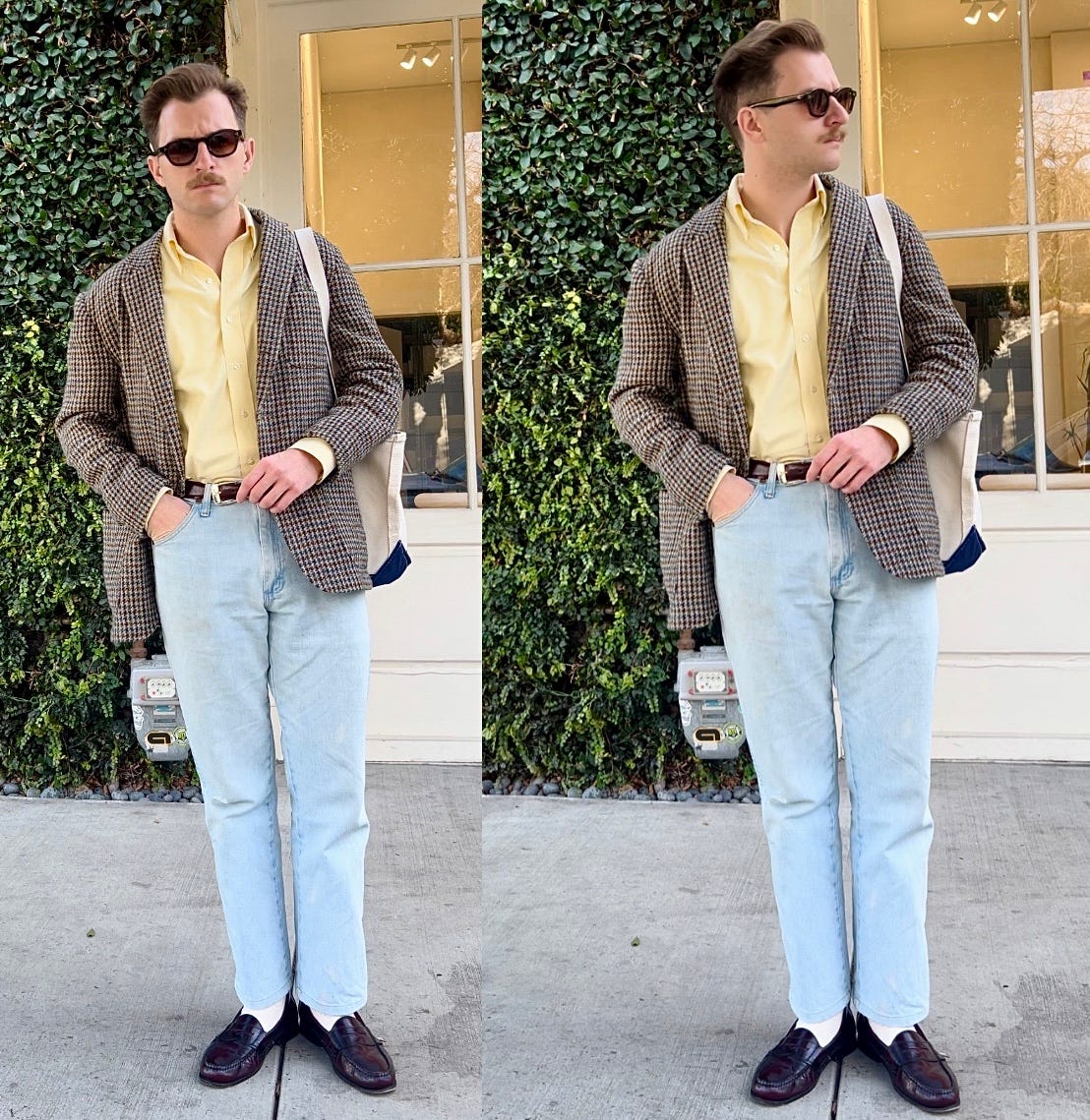
Pale Yellow Vintage Brooks Brothers Shirt. Recently, after a short search on the internet, I picked up a Brooks Brother’s Oxford Shirt in a 15-33 from a seller on eBay. In the many Ivy and Prep forums I follow there is a certain deference that BB gets. It’s the original inventor of Oxford Cloth Button Down (OCBD) so there’s a prestige that comes with the name, however, everyone will attest that in the last few years, their quality has dropped significantly. There’s no more I can add to the conversation that hasn’t been said but I couldn’t be more impressed by the quality of my eBay find. After a full wash cycle and tumble with some of my other oxfords it stood heads and tails above the rest, it was in nearly perfect condition and its form was barely crumpled. To my delight, it only needed a single smooth pass with the iron which could not be said about my wrinkled-to-shit RL and J. Crew OCBDs. After some serious starching, and the last of my button-downs were ironed and hung - I realized these premium modern shirts are worse quality than American-made second-hand Brooks Brothers shirts. And two to three times as expensive.
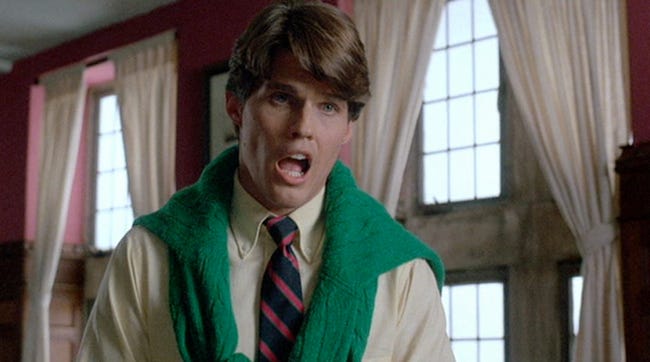
Pale Yellow is an interesting color for a shirt. It screams Easter Sunday on its own. The image that comes to mind is a yellow oxford, tied sweater, and khakis which puts a certain queasiness in my stomach. Example below.
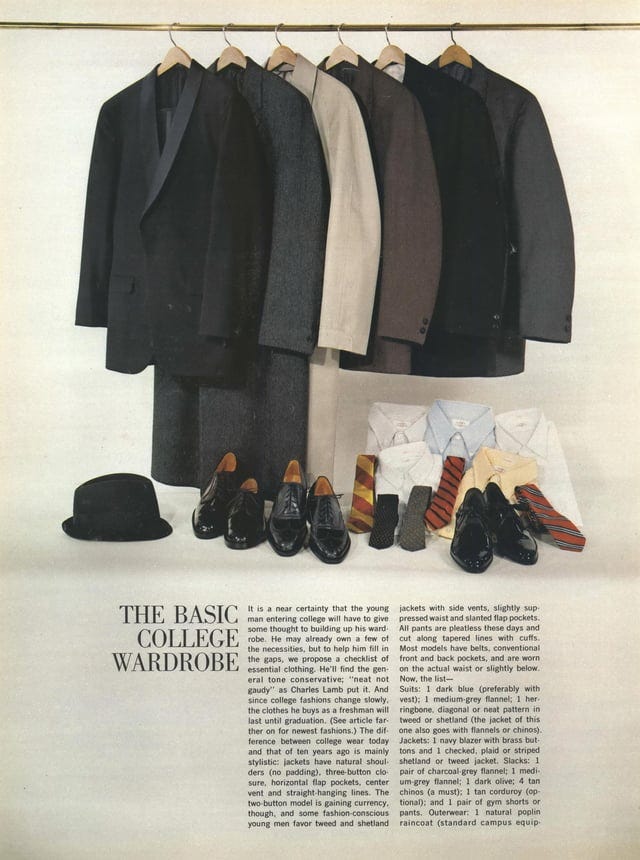
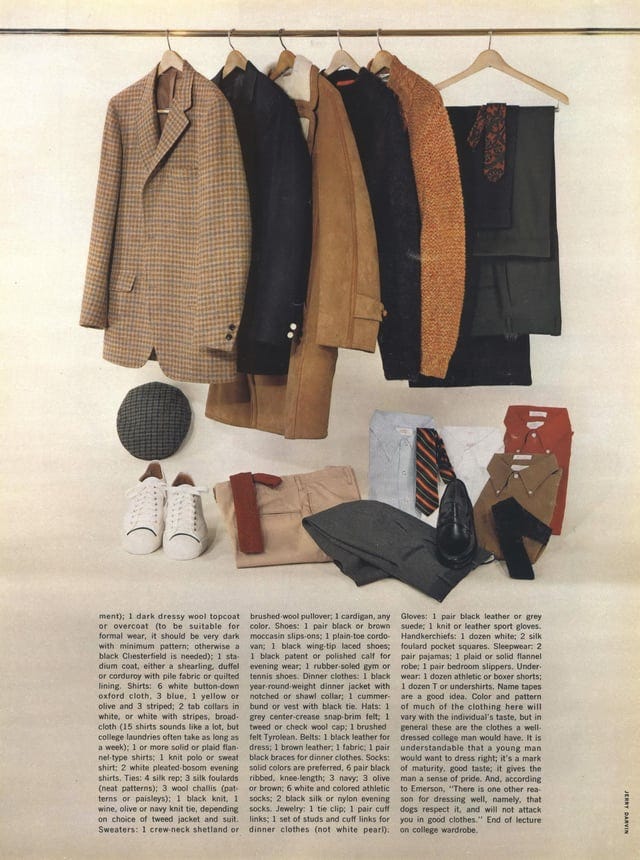
However, yellow if used with tactful and opposite colors can pull the egginess out of the shirt and become a subversive color pop in an otherwise boring outfit. I love a good clean white oxford, but it can be a bit stark or formal. The yellow allows a bit of playfulness in the outfit's overall look. A great pairing would be what I have on in the title photo, some lightwash jeans and a Harris Tweed coat. I also think wearing it with some OG107s or dark brown pants (NOT KHAKI!) would work well. Lastly, with spring around the corner - madras pants and jackets would pair exceptionally well. I first saw a yellow oxford in a book called The Ivy Look - Graham Marsh, J.P. Gaul. Within the book, there was an article from Esquire on the essential collegiate wardrobe in the 1960s. Among the items listed were 6 suit and tie combos, a dinner jacket, and 3 pairs of dress shoes along with 15 button-downs - the yellow oxford struck me as the oddest. I tried to filter in my mind all the times I’ve seen a yellow oxford and could only picture stereotypical high school preps and the Vineyard Vines one my mom got me for.. well… Easter sometime in middle school.
I already own the staple OCBDs in blue, white, striped, and salmon maybe it’s time to mix things up with a yellow OCBD. Often the prep style of the 70s is superseded in the minds of the general population by the early 2000s prep revival that unleashed bright neons and slimmed versions of the prep of the past. A muted yellow feels like a callback to a previous time, forgotten but begging to be picked back up and utilized with the new wave of Ivy/Prep aesthetic.
Eating
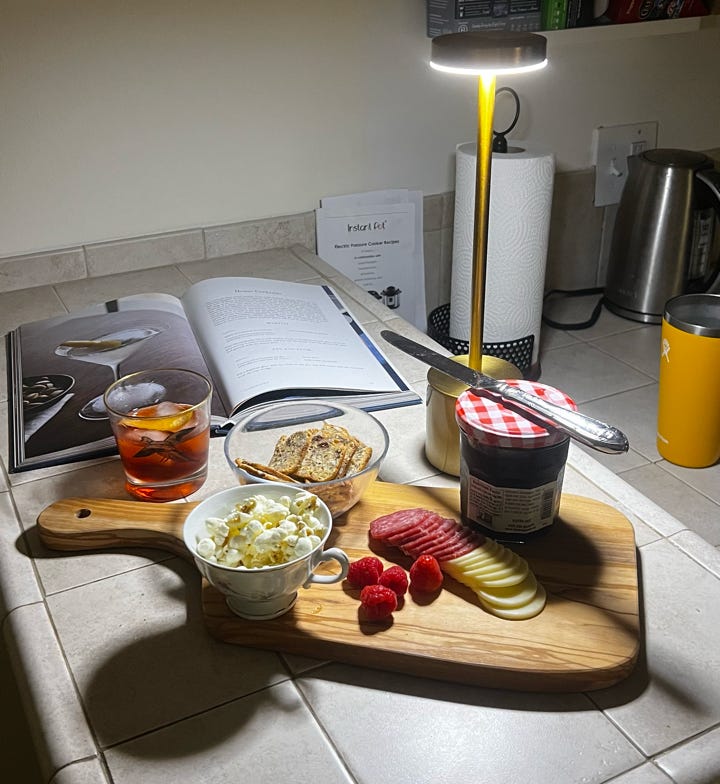
Reflection on Charcuterie Boards. I rarely make ‘em only because they’re high pressure as hell. How many beautiful charcuterie board layouts have you seen on Instagram? Everything on the board is a measured act of aesthetic principles, not unlike making sand medallions and zen gardens. How does the board look? How does the meat interact with the cheese? How do the crackers lay? Is there a feng shui from the garnishes to the jams to the Ms & Cs?? Is it a veritable visual delight as much as it pairs in palatable splendor? Yes, it’s an exhausting art form that I have never gotten the grasp of so I did away with them at parties. Long live a bowl of chips!!
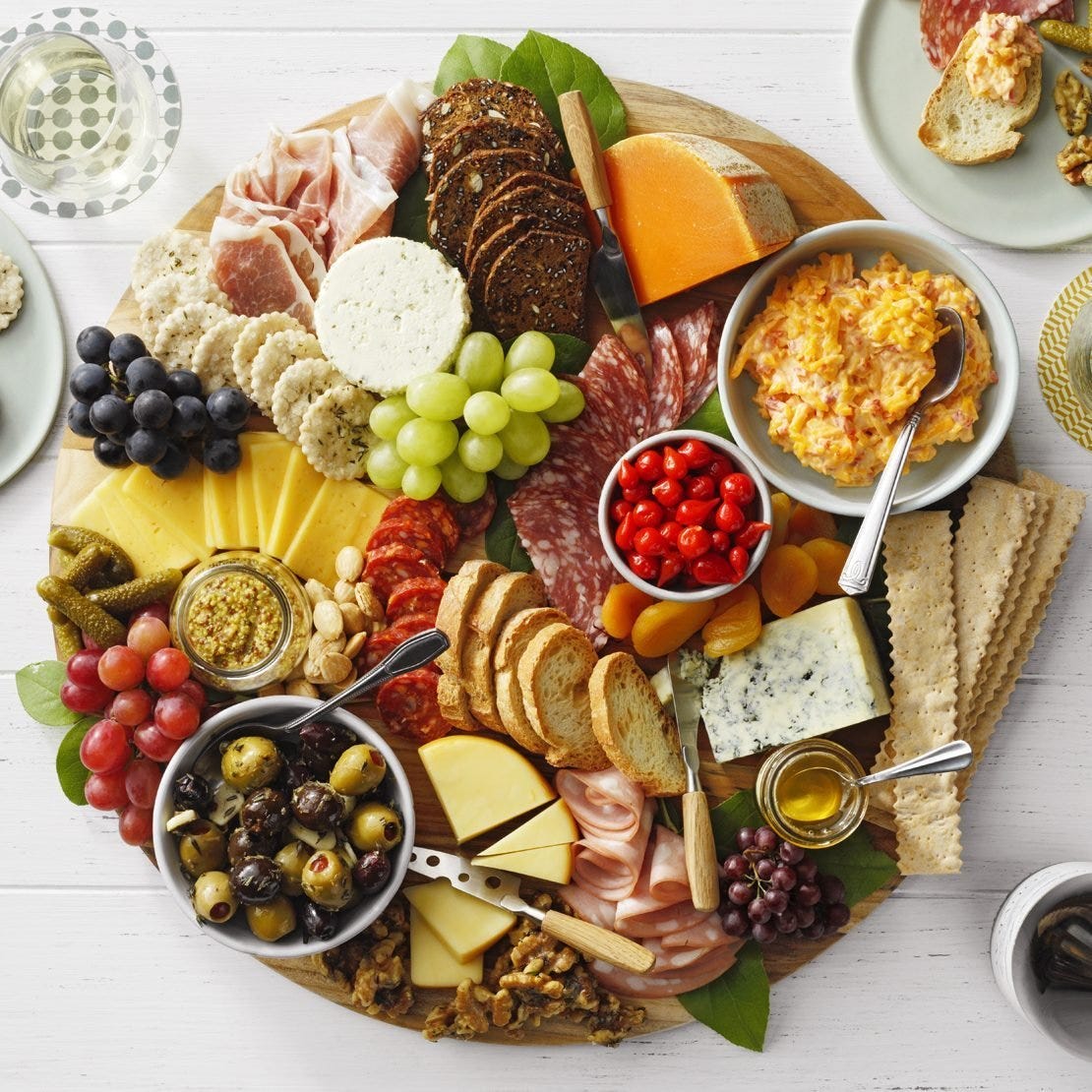
I recently read A Man and His Kitchen - Matt Hranek and saw his approach to Charcuterie Boards that wooed me back. He boils his version to the simplest form: a handsome knife, a wood board, one aged cheese, and one meat. I recently applied these principles for a guest who came by for drinks and made the board pictured in the section header. I got blackberry jam, raspberries, meat and cheese spread from TJs, a little popcorn, and some raisin rosemary crackers. I probably enjoyed eating and discussing the board more than my guest did, but the presentation was simple and earnest and it was as visually appealing as it was tasty. I just tried to look up a picture of a simple charcuterie board and it simply could not be found. So take my advice, the era of heavy meat and cheese charcuterie boards is done. Chuegy. No more. We’re embracing the bare minimum for our boards and celebrating simplicity one meat and one cheese at a time.
Reading
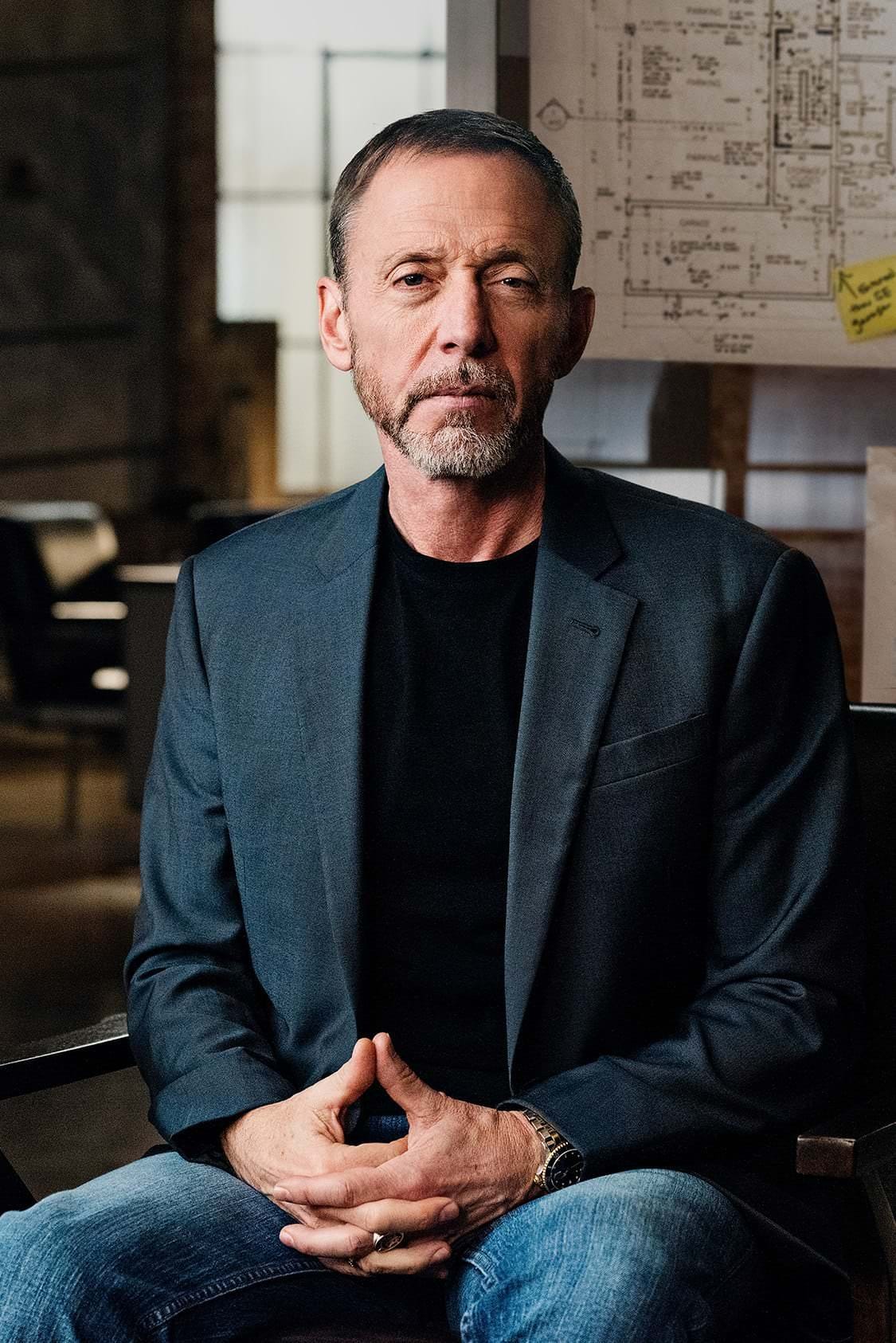
Chris Voss - Never Split the Difference
Negotiation for nice guys. If you’ve ever been to a flea market with me, you’ve probably seen some most pitiful negotiations of all time. I’m not a ball buster, I know it, and never have been. If an item is marked as $50, I’ll bring the seller to $45 and call it a day. What a bargain. I’ve passed this author multiple times, catching glimpses of his masterclass on Delta Flights… No way I’m watching that when the LEGO Batman Movie is on. The concept of a hostage negotiator bringing his experience to the business world sounded cool as hell but didn’t apply to me so I was in no rush to pick it up. It wasn’t until my friend called out my terrible negotiation skills that I decided it was time to dig in. From the first couple of pages, I was hooked. The author is a bit self-patting but the concepts within it were far more applicable to my work and life than I previously realized. Some of which I’ll distill here but first I’ve read a couple of seminal self-help books in the past.
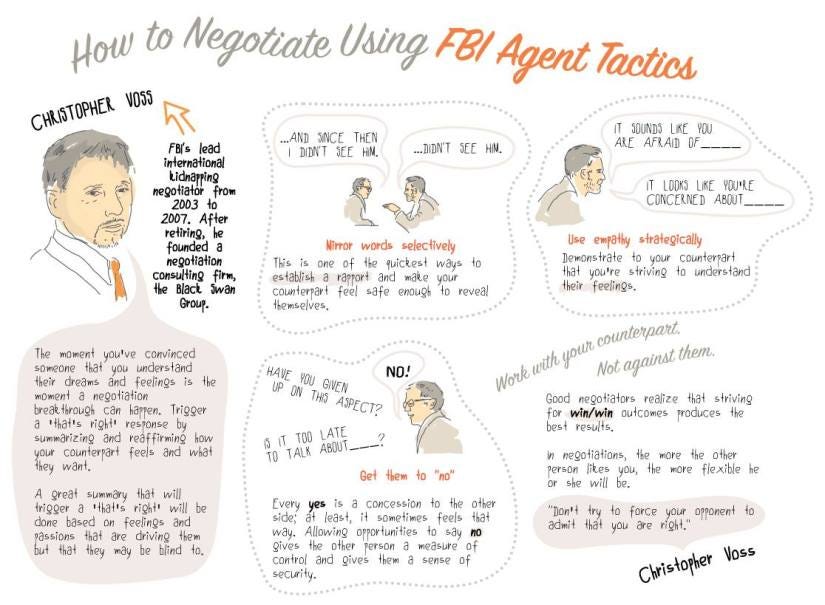
My first was How to Win Friends and Influence People then Subtle Art of Not Giving a F***, 48 Laws of Power, and Most of Ryan Holliday’s bibliography on Modern Stoicism. These books were all great, but a lot of the concepts I’ve read only stuck around for a couple of weeks before being whisked away behind the folds of other You-Can-Do-It mumbo jumbo. What made this book so great was that it had some real practical applications in it and the concept was easy. Tactical Empathy: Be kind, listen, and ask open-ended questions. That’s the core. He talks about emotional labels, mirroring, and negotiator types but also being able to listen to the other side, empathize entirely, and subdue their bluntness with your kindness. I’ve been hooked and gutted by forceful hardball negotiators who seemingly won’t budge from their offer, it gets old and frustrating (I’m sure you’ve been there too.) You might be saying, okay, come on how do I go from using open-ended questions to closing a deal? That’s where the psychological aspect of it comes in. The questions you’re asking should lead your counterpart towards where you want the deal to go while making it seem like they are in charge. The questions need to start with “How..?” and “What..?”. “How did you arrive at that price?” “How many people are inquiring about it?” “What are some of the benefits of this item?” Listen to what they are saying, and repeat the most important parts back to them with a cool and calm voice. Pin an emotion they are having by using “It seems like..” “It sounds like..” “It sounds like you’re anxious this item won’t sell by the end of the day, I’m happy to purchase it now if you’d work with me.” and continue to melt away defenses with questions, maybe move away from the item and talk about other things. And then when things stall drop an extreme Anchor* way lower than their price. After they laugh it off and give you a slightly lower price “How am I going to do that? I don’t have that money.” and keep them talking with open-ended questions until finally, we arrive at a price that feels like they are helping you out and curing their internal angina about not being the bad guy. I’d recommend a read of the book, it’s great for us who know negotiation is part of everyday life but aren’t born closers.
*Anchor is an initial price. Some suggest it should be 65% of the price YOU want.
Final Note
Thank you for reading this far. Around this time last year, I released an experimental zine called Lost Horizon Dispatches which was a lot of fun to do but took a lot more work than I cared to put in. This format is easy, fun, and low-stakes so I’ll try to get something out monthly. What would prevent you from subscribing? It seems like you’re hesitant I’ll send too many dispatches and this would be another newsletter you’d forget about. How many newsletters are you subscribed to where you know the writer personally? Wouldn’t it be fun to take a break from the usual inbox fodder you get and see a friend’s name along with stuff they are passionate about? That’s the community I’m hoping to build and I hope you join in.